Mastering Knife Skills: Essential Techniques for Every Home Cook
Ever watched chefs chop quickly and wonder how? Knife skills aren’t just for top chefs. They’re key for any cook. They make cooking faster, safer, and more precise.
Learning the right way to hold a knife is important. So is knowing which knives to use. Good knife skills mean fewer accidents and quicker cooking. Isn’t it time to be a knife pro in your kitchen?
Understanding the Importance of Knife Skills
Mastering knife skills in cooking is important. It’s not just about making perfect cuts. It’s also about improving your whole cooking experience. Learning proper knife techniques is key for home chefs. It helps with exact cuts, fast work, and staying safe in the kitchen.
Why Knife Skills Matter in Cooking
Good knife skills make you more efficient. They can cut food prep time by 30-50%. Precise cuts mean less food waste, saving money and helping the planet. You’ll save time and make your dishes look and cook better.
Choosing the right knives can make cutting 40% more efficient. Use a chef’s knife for most things, a serrated knife for bread, and a paring knife for small tasks. This makes you faster and improves your cooking prep.
The Impact of Good Knife Skills on Safety
Using knives wrong can cause accidents, so being safe is very important. Sharp knives lead to 50% fewer cuts than dull ones. Keep your knives sharp to cut safely and prevent injuries.
Using the claw grip cuts down on fingertip cuts by 70%. Cutting with the right body position adds 40% more control. With practice, you get 15-30% better at these skills in a month. This makes cooking safer for you.
| Aspect | Improvement |
|---|---|
| Cooking Efficiency | 30-50% reduction in prep time |
| Food Waste Reduction | Approximately 25% |
| Sharp Knife Use | 50% fewer cuts |
| Claw Grip Adoption | 70% reduction in fingertip injuries |
| Correct Body Positioning | 40% increase in control and stability |
| Skill Proficiency Improvement | 15-30% over a month with consistent practice |
Types of Knives Every Cook Should Have
Every home cook needs good kitchen tools, with knives being very important. There are many knives available for different cooking tasks. Knowing about each knife type helps you choose the right ones for your kitchen.
Essential Chef’s Knife Features
A chef’s knife does about 80% of your cutting work. They are usually 8 inches long but can be from 6 to 12 inches. They’re great for many tasks, like chopping onions or carving meat. After testing 34 knives, we found 8 top ones that are strong and work well.
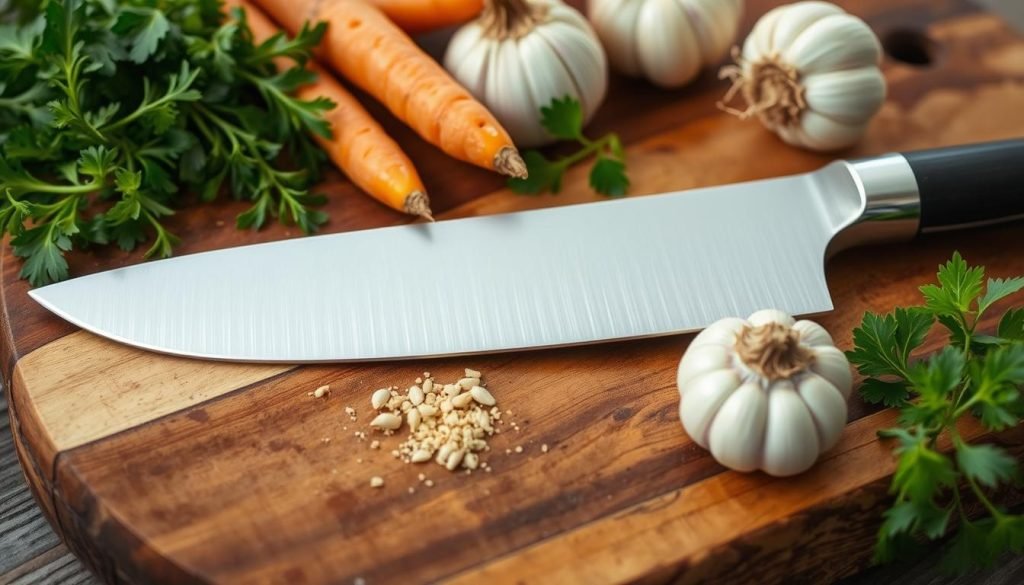
When picking a chef’s knife, think about how it feels, its weight, and shape. Western knives are heavier and good for chopping, while Japanese knives are lighter and great for careful cuts. A good chef’s knife makes preparing food easier and improves your cooking.
Other Useful Knives for Your Kitchen
Along with a chef’s knife, other knives help in the kitchen too. A santoku knife is great for slicing and chopping. It’s 6 to 7 inches long and good for vegetables and light meat tasks. Shorter santoku knives were the best in our tests for being handy to use.
The nakiri knife is good for cutting vegetables with its flat edge. The best nakiri knives we found have a 6 to 7 inches blade, making cutting quick and even. For small jobs, like peeling fruits or hulling strawberries, a paring knife is perfect. We tested many and found the best ones have blades just under 4 inches.
If you need to do more specific jobs, think about getting a boning knife and a meat cleaver. The Victorinox boning knife is great for cutting meat because it’s flexible and comfy to hold. A good meat cleaver, from the 9 we reviewed, needs to be strong but easy to control for safe chopping.
| Type of Knife | Ideal Length | Best Uses |
|---|---|---|
| Chef’s Knife | 8 inches | Chopping, slicing, dicing, carving |
| Santoku Knife | 6-7 inches | Slicing, dicing, mincing |
| Nakiri Knife | 6-7 inches | Vegetable prep, push-cutting |
| Paring Knife | Under 4 inches | Peeling, trimming, hulling |
While special knives are nice to have, a good set of a chef’s knife, paring knife, serrated bread knife, and a nakiri or santoku knife works for most. Keeping your knives sharp and well-cared for means they’ll last a long time.
Proper Knife Grip Techniques
Learning how to hold a knife right is key for safe, fast cooking. A good grip can make cooking fun. It helps you chop better and faster.
The Pinch Grip: What You Need to Know
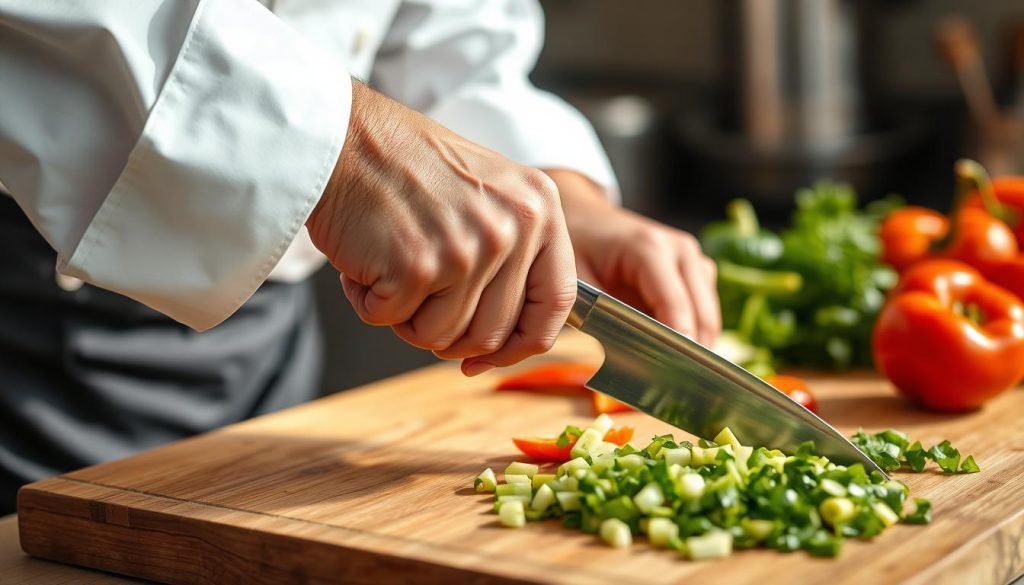
The pinch grip is loved by many chefs. You hold the knife between your thumb and pointer finger. About 70% of cooking schools teach it for better control. Try it and you’ll cut more precisely.
Plus, the pinch grip keeps you safe. It cuts the chance of getting hurt by 25%. So, starting with the right grip is important.
The Handle Grip: Benefits and Drawbacks
New cooks often start with the handle grip. It’s simple and offers good control. But, holding it too tight can strain your wrist.
Yet, it’s good for tough cutting like thick veggies or meats. Changing grips can also reduce tiredness. It helps cooks cut up to 30% longer without getting tired.
Different tasks need different grips. For detailed cutting, try the pinch grip. For hard cuts, the handle grip works best. Learning various grips improves your skills.
Knife Safety Tips for Home Cooks
Keeping safe in the kitchen is key, especially with knives. Use good safety tips and chopping methods. This makes cooking safer.
The Right Cutting Surface
Picking the right cutting board helps keep the kitchen safe. Use wooden or plastic ones for stability. Clean and sanitize them well to avoid germs.
Safe Cutting Techniques
Safe cutting methods lower injury risks. Keep knives sharp; dull ones are dangerous. Sharpen them at 20 degrees for balance, or 15 degrees for soft foods.
Here are top kitchen safety tips:
- Always use a sturdy cutting board to avoid slips.
- Maintain a sharp knife to reduce the effort needed for cutting.
- Adopt the right grip techniques to ensure control over the knife.
- Practice proper chopping techniques to enhance precision and safety.
Now, let’s check out some knife safety stats:
| Safety Measure | Reduction in Injury Risk |
|---|---|
| Using Sharp Knives | 50% |
| Wearing Cut-Resistant Gloves | 70% |
| Effective Knife Storage | 60% |
| Implementing Safety Protocols | 50% |
Finally, always stay alert in the kitchen. Don’t get distracted. Whether it’s using safety tools or learning to chop, safety first makes cooking fun and safe.
Essential Cutting Techniques to Master
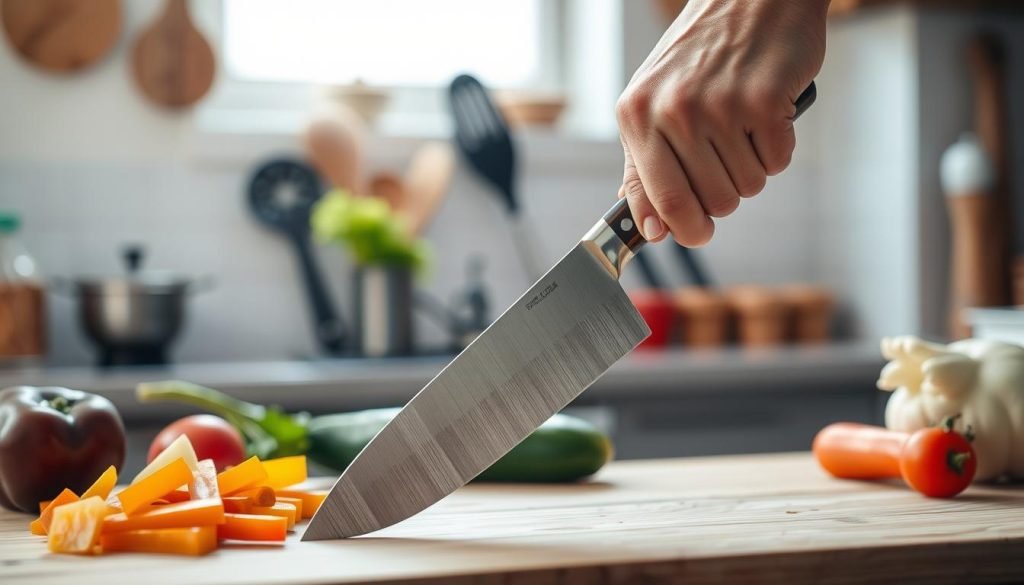
Learning essential cutting skills can really change your cooking game. It shapes how your food looks, tastes, and feels. We’ll show you how to dice, julienne, brunoise, slice, and chop like a pro.
Dicing and Mincing
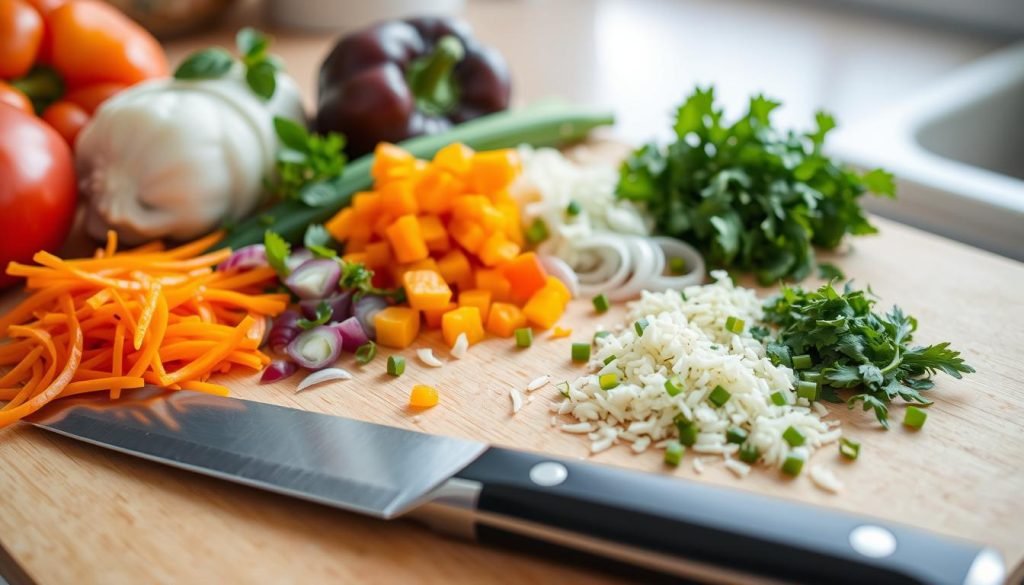
Dicing makes your food into even cubes. This makes sure everything cooks just right. For example, cutting an onion into even pieces helps. Mincing is for making things super small, like garlic. Standing the right way helps you dice better.
Julienne and Brunoise
Julienne cuts turn veggies into thin sticks. Perfect for quick cooking or topping a dish. First, slice the veggie then cut those slices into strips. For brunoise, which are tiny cubes, just cut those strips smaller. Both need a good knife grip.
Slicing and Chopping
Slicing is moving the knife tip to heel. It’s used for even cuts. Keep slices the same thickness for best results. Chopping is more for big stuff, like squash. A rocking move works well. A sharp knife is safer and works better.
| Technique | Purpose | Best Used For |
|---|---|---|
| Dicing | Uniform cubes | Onions, carrots |
| Mincing | Fine cuts | Garlic, herbs |
| Julienne | Thin matchsticks | Vegetables |
| Brunoise | Fine dice | Vegetables |
| Slicing | Even slices | Meats, fruits |
| Chopping | Large pieces | Root vegetables |
Maintenance: Caring for Your Knives
Keeping your knives in good shape is key. This means they will work well and safely in your kitchen. Knowing how to sharpen and store your knives is important. It helps your kitchen tasks run better.
How to Properly Sharpen Your Knives
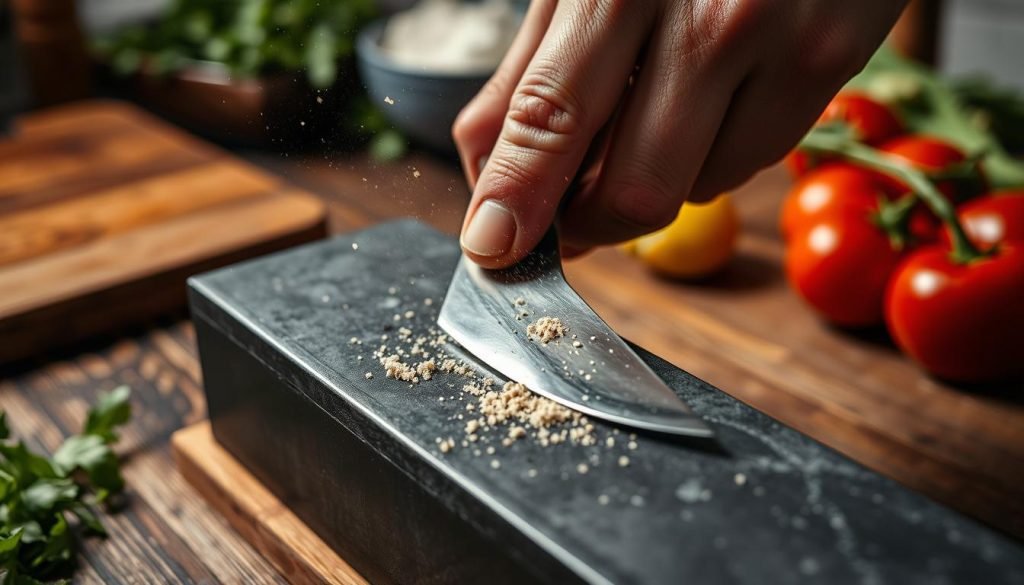
It’s important to sharpen your knives the right way. Use a 15-degree angle for Japanese knives. For American and European ones, a 20-degree angle is better. You should hone your knives often to keep them sharp. Sharpen them once or twice a year based on how much you use them. About 10-15 minutes of sharpening practice can make a big difference.
- Japanese chefs sharpen their knives every day because a sharp knife is crucial.
- Professional chefs should sharpen their knives about once a week.
- Home cooks might want to sharpen their knives once a month.
Sharpening your knives often means you don’t have to remove as much material. This keeps your blades sharp longer. Use a honing rod for 8-10 strokes. This keeps them sharp up to 10 times longer. Don’t cut on hard surfaces like marble or glass. These can dull your knives fast.
Cleaning and Storing Your Knives
Looking after your knives means more than keeping them sharp. You also need to clean and store them right. Always wash your knives with your hands to keep them from getting damaged. Wash off acidic foods right away. This stops the edges from wearing down. Use a bit of food-safe oil on carbon steel knives to stop rust.
Don’t leave knives in the sink. Even stainless steel can get damaged.
Use wooden or plastic boards instead of marble or glass. This helps keep your knife edges sharp. Many pros keep their knives on a magnetic strip. It’s safer and easier to get to them. If you have a knife block, make sure the knives are dry to stop germs from growing. For cutting meat, use a plastic board. You can clean it at high temperatures to kill germs.
Good maintenance and cleaning are crucial for keeping your knives in top shape. This makes cooking safer and easier.
Practicing and Improving Your Knife Skills
To get better in the kitchen, you need to practice your knife skills often. Getting these skills right makes you quicker, safer, and your food tastes better. Here’s a guide to making a practice area and exercises to help you improve.
Setting Up a Practice Station
Set up a good spot for practicing cutting techniques. Make sure it’s bright and tidy, with a solid cutting board in place. You should have the main knives, like a chef’s and a paring knife. Also, keep your space neat so you can focus on practicing.
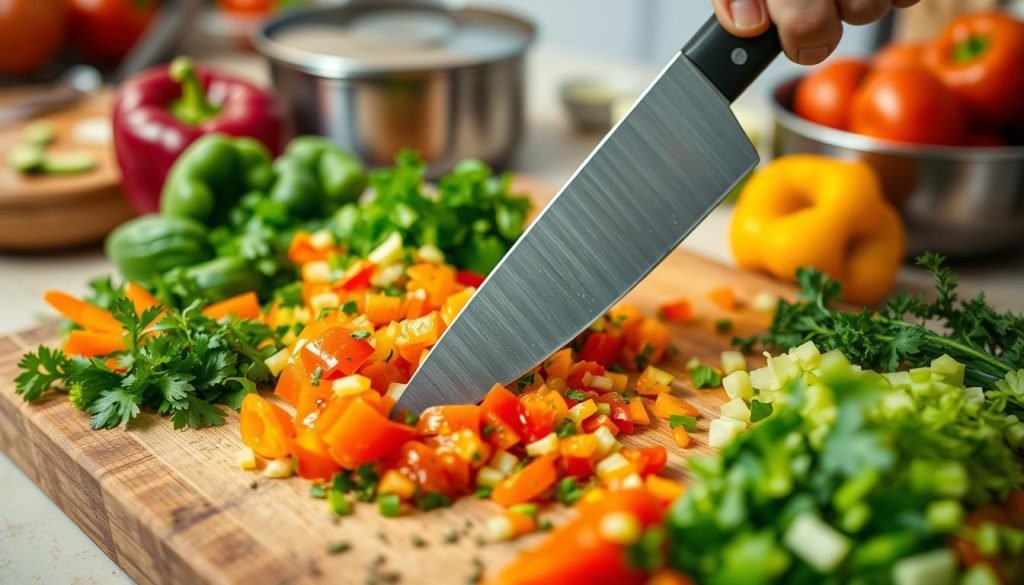
Knives, especially those like the Victorinox 8⅓-inch serrated bread knife and 8-inch chef’s knife, are key tools. Keeping them sharp is a must. Sharp knives are safer and cut down on accidents by 75%.
Recommended Exercises for Skill Improvement
Try these activities to get better with your knives:
- Mincing and Dicing: Dice onions and carrots first. Aim for pieces that are the same size for even cooking.
- Julienne and Chiffonade: These cuts make thin pieces great for salads. Practice to get better.
- Rock Chop: This is good for herbs. Use a rocking cut and hold the knife right for control.
- Slice and Bias Slice: Pull the knife along the board for slices. Bias slices are angled and make your food look good.
Focus on the right way to hold a knife and keep practicing. Practicing a bit each week can make you 60% better in three months. Using the “claw grip” when you hold food can also cut down on nicks by half.
Putting time into cutting practice will change your cooking game. You’ll be quicker, safer, and make tastier dishes. Plus, cooking will become more fun.
The Role of Knife Skills in Meal Prep
Learning to use knives well is key in cooking. It saves time and makes food safer and better. It’s all about making ingredients the same size.
Speeding Up Your Cooking Process
Being good with a knife means faster meal prep. Home cooks can cut 30% off their cooking time. For pros, this quickness is crucial during busy hours.
Practicing once a week can make you 40% quicker in three months. That’s a big improvement!
Proper knife skills can reduce kitchen-related injuries by up to 50%, emphasizing the importance of handling techniques and awareness.
Creating Uniform Ingredients for Even Cooking
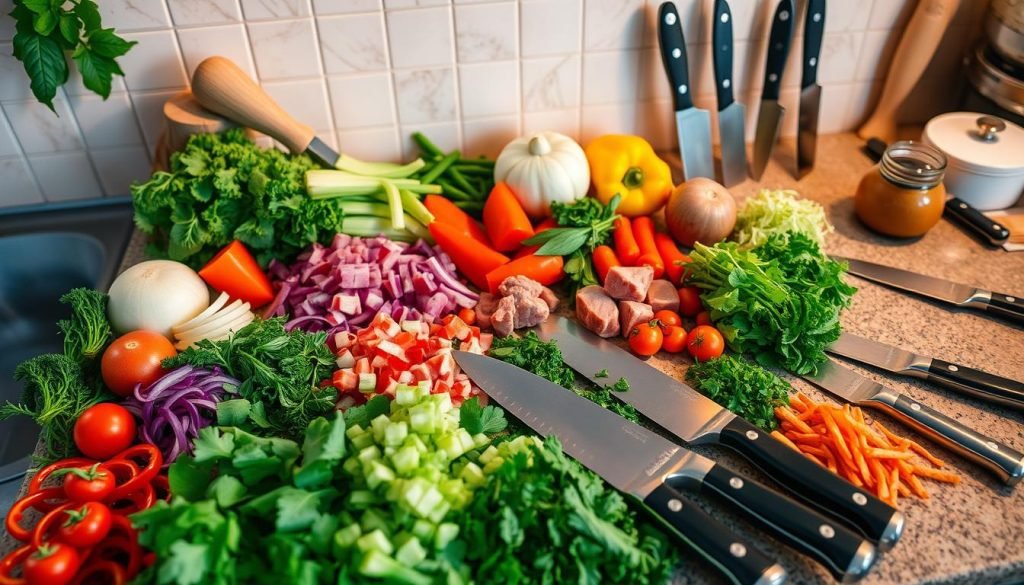
Even cuts help cook food evenly. This is good for taste and texture. For example, how you dice veggies can change a dish’s flavor.
Dishes that look good can make people 70% happier. Cutting things the same way helps with this. Skills like julienning make food look nice and taste great.
In short, knowing how to use knives is a big deal in cooking. It makes prep smoother and safer. Regular practice helps a lot.
| Knife Technique | Description | Benefits |
|---|---|---|
| Julienne | Cutting ingredients into thin strips. | Uniform cooking and attractive presentation. |
| Dicing | Cutting into specific-sized cubes. | Even cooking and flavor distribution. |
| Chiffonade | Slicing leafy vegetables into thin ribbons. | Minimizes bruising and enhances visual appeal. |
| Brunoise | Finely diced, ⅛ inch cubes. | Used for precise cooking and garnishing. |
Common Mistakes to Avoid with Knife Skills
Many people make the same mistakes when cutting in the kitchen. These mistakes can make you slower and less safe. Let’s look at what to avoid for a better cooking experience.
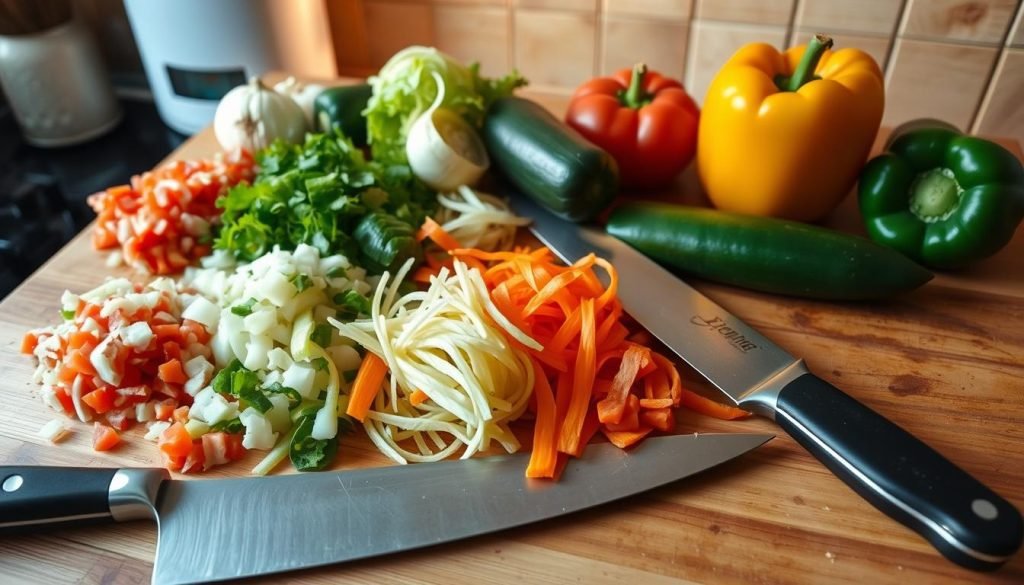
Overlooking Knife Maintenance
A big mistake is not taking care of your knives. Cutting on hard surfaces, like glass or ceramic, makes them dull. This also makes cutting dangerous. Use wooden or plastic boards instead, to keep your knives sharp.
Never put knives in the dishwasher. The soap used is very strong and can ruin the blades.
- Always hand-wash knives to prevent damage.
- Dry knives quickly, within 2-3 minutes, to stop rust, even if they’re made of stainless steel.
- Sharpen your knives regularly to keep them working well for a long time.
Incorrect Grip Techniques
Knowing how to hold a knife is key for safe and precise cutting. If you hold it wrong, you could get hurt or cut poorly. Avoid gripping the handle too far back or placing your fingers incorrectly.
The right grip gives you better control, making cutting safer and more precise.
To avoid mistakes in how you hold the knife, remember these tips:
- Pinch Grip: This way, you pinch the blade between your thumb and pointer finger, which gives you the most control.
- Handle Grip: This is simpler for beginners, but it might make control harder. It’s not the best for detailed work.
Getting good at these grips will make your cutting sharper and safer.
| Factor | Common Mistakes | Correct Practices |
|---|---|---|
| Cutting Surface | Ceramic and glass surfaces | Wooden or plastic boards |
| Cleaning | Dishwasher cleaning | Hand-washing and quick drying |
| Grip | Incorrect finger positioning | Pinch grip for better control |
| Maintenance | Neglecting sharpening | Regular honing and monthly sharpening |
Fixing these cutting mistakes can make you safer and better in the kitchen. Remember, great cooking starts with the basics, like how you use your knives.
How Do Knife Sharpening Techniques Affect Mastering Knife Skills in the Kitchen?
Mastering knife sharpening techniques is essential for any aspiring chef. A well-sharpened knife not only enhances precision but also boosts confidence in the kitchen. With each slice becoming effortless, these skills enable cooks to focus on creativity rather than struggling with dull blades, ultimately elevating their culinary experience.
Resources for Further Learning
Learning to use knives is just the start of your cooking journey. There are lots of resources to help you get better. Books, online courses, and videos can teach you more and improve your skills.
Recommended Books on Knife Skills
Reading books about cooking can help you a lot. “Mastering Knife Skills: The Essential Guide to the Most Important Tools in Your Kitchen” by Norman Weinstein is good. It shows you how to use knives step by step with pictures. Also, “The Professional Chef” by The Culinary Institute of America is great. It gives detailed lessons on knife use.
Online Courses and Video Tutorials
Nowadays, learning online is super helpful. You can learn to cut stuff in your own time. Websites like Udemy and Coursera have lots of knife skill classes. Want something more? Try MasterClass. Gordon Ramsay there teaches about cooking. These online tools make learning how to use knives easy and fun.
Using these resources, you can get really good at using knives. This makes cooking safer, easier, and more fun.