Best Kitchen Knives: A Comprehensive Guide
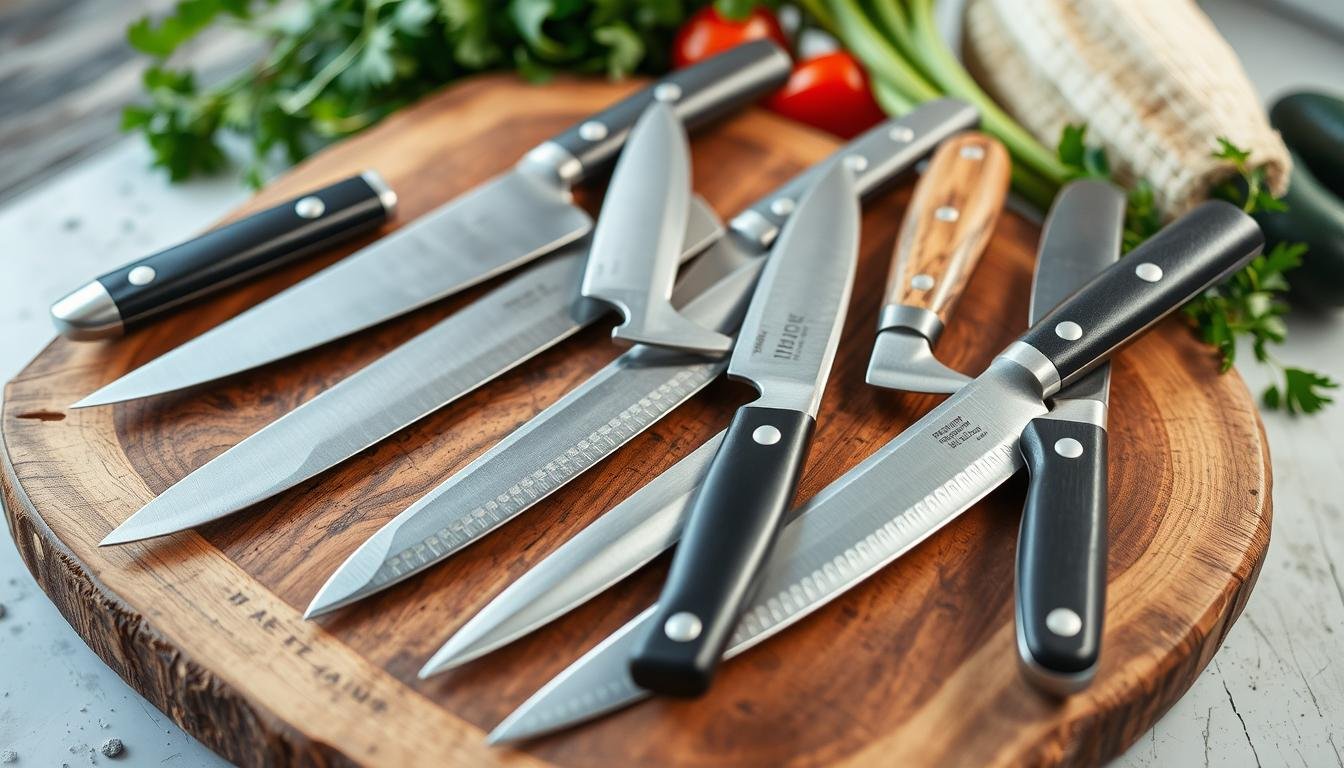
Ever wondered how a good knife changes your cooking?
The right knives make cooking faster and more fun. This guide will show you the best knives for any cook. You will learn what you need for your kitchen work.
We cover everything from picking knives to taking care of them. The perfect knife set can change your kitchen game. Keep reading to learn how to boost your cooking with top knives.
Understanding Different Types of Kitchen Knives
Finding the right kitchen tools can be hard. Yet, knowing about different knives is key for any cook. Whether you’re a pro or just cook for fun, the right knife makes all the difference.
Chef’s Knife: The All-Purpose Essential
The chef’s knife is vital in the kitchen. It does about 80% of the cutting jobs. It can be 6 to 12 inches long, but most are 8 inches. This knife chops veggies, slices meat, and minces herbs well.
Its big blade and sharp edge work for almost everything. This makes it a must-have for cooking at home or in a restaurant.
Paring Knife: Precision and Detail
A paring knife might be small, but it’s very useful. It’s usually just under 4 inches long. You can use it for peeling, trimming, and careful cutting.
Its small size gives you lots of control. For tiny tasks, it’s better than a big chef’s knife. Utility knives, which are 4 to 9 inches long, are also helpful.
Santoku Knife: A Japanese Favourite
The santoku knife is well-liked for its balance and versatility. It’s usually 5 to 7 inches long. This Japanese knife is great for slicing, dicing, and mincing.
It’s lighter and easier to use than a big chef’s knife. Its sheepsfoot blade lets you cut quickly and accurately.
Bread Knife: Slicing Through Crusts
A bread knife has a serrated blade for cutting bread without smashing it. The best length is about 9 inches to cut big loaves easily. This knife is also good for cutting soft things like tomatoes and cakes.
Having these knives: a chef’s knife, paring knife, santoku knife, and bread knife prepares you for many kitchen tasks. You might want special knives like the nakiri or carving knife for certain foods. But, these four knives will do most of the work.
Material Matters: Steel Types Explained
Choosing the right knife matters. The material it’s made from affects durability, sharpness, and upkeep needs. We’ll cover stainless steel, high-carbon steel, and ceramic knives. Each type serves different kitchen needs.
Stainless Steel: Durability and Maintenance
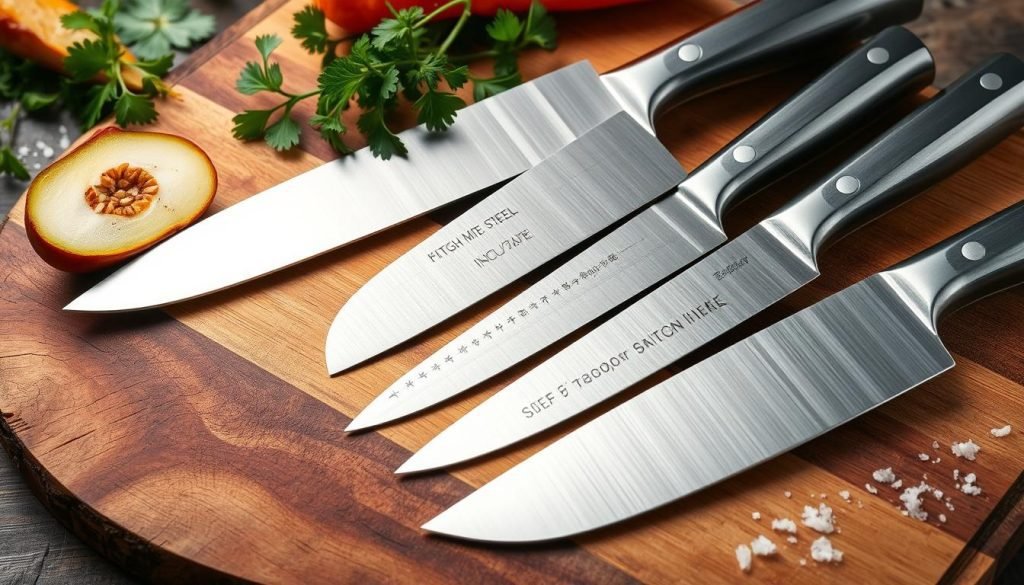
Stainless steel knives resist rust well because they include 8-30% chromium. They don’t use nickel, which helps them stay hard and durable. These knives, often found in professional German kitchens, have a balance of hardness and sharpening ease. Their quality reflects the complex process and expertise needed in making them.
High-Carbon Steel: Sharpness and Edge Retention
High-carbon steel knives stand out for their sharpness and lasting edge. They have 1-2% carbon, making them hard but a bit brittle. They stay sharp longer but need care to prevent rust. Sharpening these knives takes skill and time, highlighting the need for regular maintenance.
Ceramic: Lightweight and Rust-Free
Ceramic knives are light and don’t rust, offering a different cutting experience. They stay sharp without much sharpening needed, thanks to their zirconium dioxide material. But, they can chip or break if used too hard. They’re great for precise tasks with little maintenance needed.
Knowing these materials helps you choose the right knife for your kitchen. Whether it’s stainless steel’s durability, high-carbon’s sharpness, or ceramic’s lightness, there’s a knife for every need.
Choosing the Right Knife for Your Cooking Style
Figuring out which knife fits your cooking style can make cooking way better. It doesn’t matter if you cook at home, are a chef, or just cook sometimes. Choosing the right knife from the many options is very important.
For Home Cooks: Basics Everyone Should Own
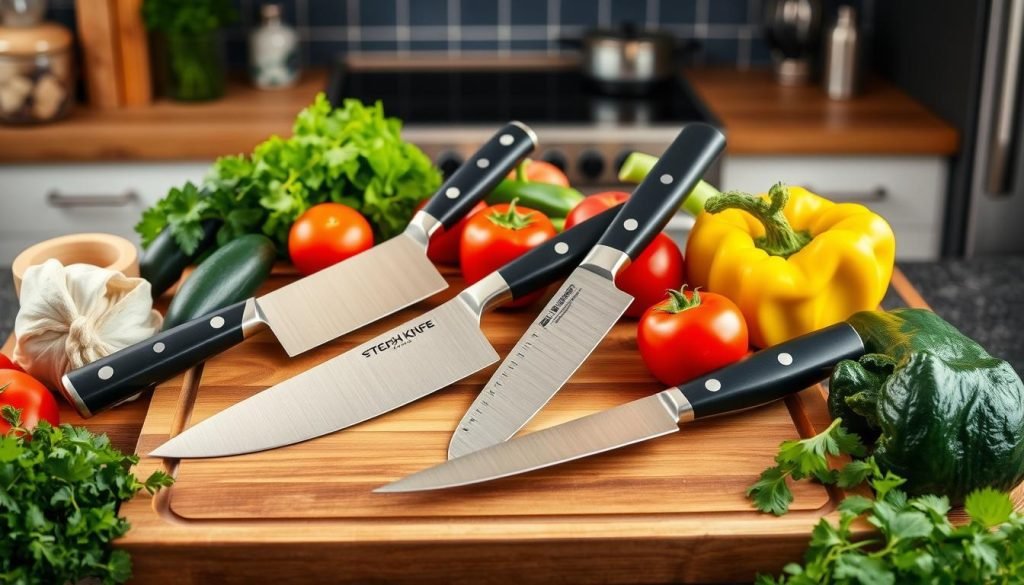
Home cooks should look for knives that last long and can do many things. You should think about getting some kitchen essentials:
- Chef’s Knife: An 8″ chef’s knife is great for most jobs.
- Paring Knife: A 3-inch paring knife works best for precise cuts.
- Santoku Knife: A 7-inch Santoku knife is good for cutting, dicing, and mincing.
- Bread Knife: About 8 inches long, it’s perfect for cutting bread.
For Professional Chefs: Advanced Options
Professional chefs should use special knives for better precision and efficiency. They should use professional knives like:
- Gyuto Knives: These knives are versatile and preferred by many.
- Forged Knives: They last long and are well-balanced, which chefs love.
- High-Carbon Steel Knives: These stay sharp longer and are very tough.
For Occasional Users: Value Picks
If you don’t cook much but want good tools, consider these kitchen essentials:
- Stamped Knives: They are less expensive but still quite good.
- Medium-Sized Knife: A single versatile knife can be enough. Look for an 18 cm blade.
- Sharpening Steel: A 10-inch sharpening steel keeps your knives sharp. It’s good for most homes.
Essential Knife Skills for Better Cooking
Learning knife skills makes cooking faster and safer. Knowing how to handle knives and keeping them sharp makes cooking better. You’ll cut things just right and make your dishes taste perfect.
Proper Grip Techniques
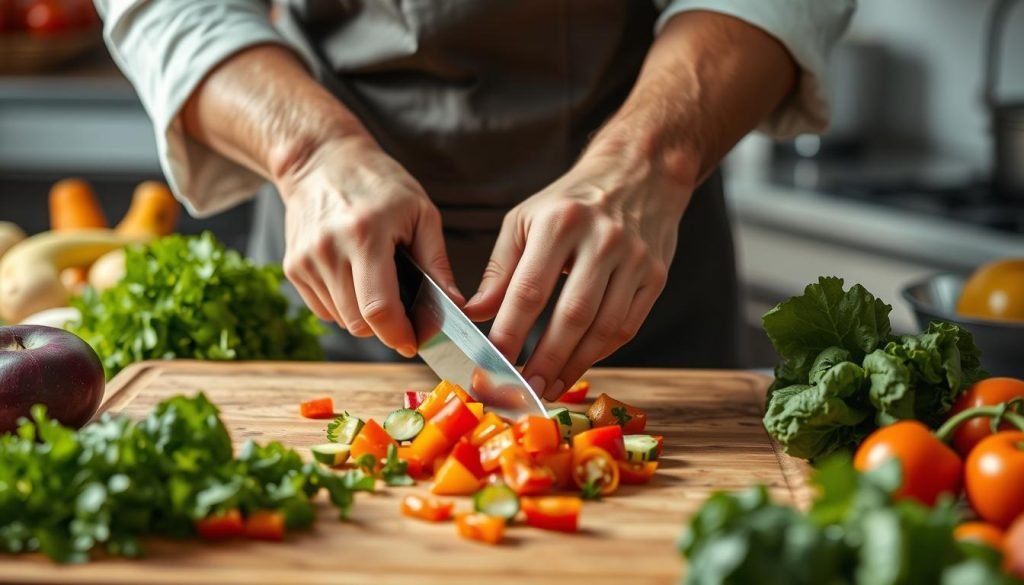
Knowing how to hold a knife is key. There are two main ways: the pinch grip and the claw technique. Chefs love the pinch grip for control. It means pinching the blade with your thumb and index finger. The claw technique keeps your fingers safe as you cut. They make you cut faster and safer.
How to Chop and Dice Efficiently
Quick chopping and dicing are great skills to have. Different cuts are used for different foods:
- Julienne: 2 ½ inches long, 1/8 inch wide, and 1/8 inch high, suitable for salads and stir-fries.
- Brunoise: Cubes that are 1/8 inch all around, great for garnishes and sauces.
- Batonnet: ¼ inch by ¼ inch by 2 ½ inches, mainly for French fries.
- Chiffonade: Thin strips, awesome for leafy greens and herbs.
- Bias Cut: Changes in size, good for soaking up flavors.
Knowing these cuts helps your food cook right. Chefs get prep done faster using these skills. Practice makes you better and faster.
Sharpening Basics: Keeping Your Knives Sharp
Keep your knives sharp to cut well. A dull knife is dangerous because it slips easily. Get a good knife sharpener. Sharpen your knives with a pro one or two times a year. Use a honing steel to keep them sharp in between.
Good knife skills and caring for your knives save you time. They also make cooking safer and more fun.
Knife Maintenance: Keeping Your Knives in Top Shape
Taking care of your knives is key to their long life and top-notch performance. By doing a few simple things, you can keep your knives looking great. This makes cooking easier and more fun.
Cleaning Techniques: Do’s and Don’ts
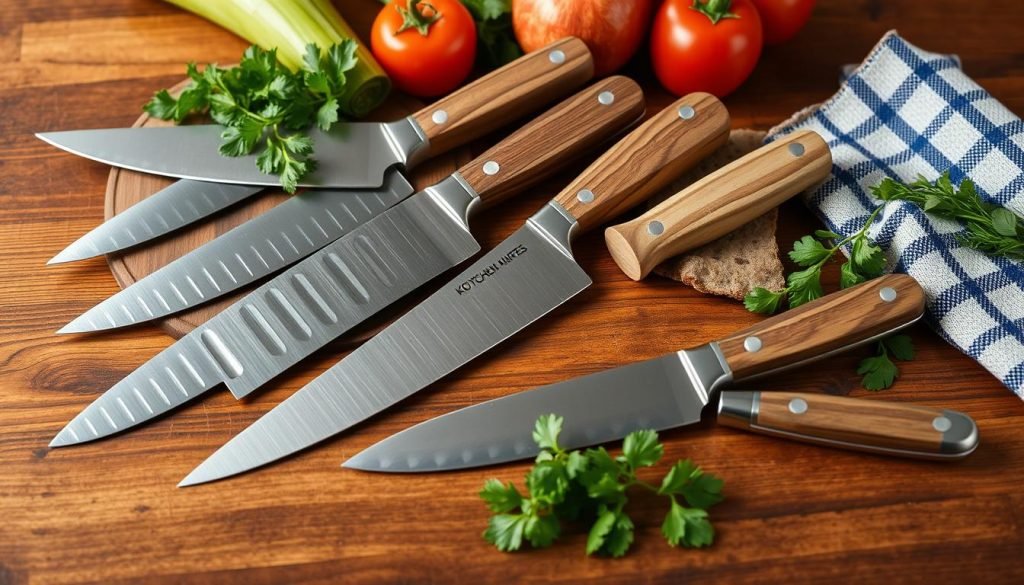
Wash your knives right after using them. It should take just a little time. Use warm soapy water and a gentle sponge. Don’t use rough materials because they can scratch the blade. It’s important to dry knives right away with a towel. If you let them air dry, they might rust, even if they’re stainless steel. Never put your knives in the dishwasher. The heat and pressure can damage the blades.
How to Store Your Knives Safely
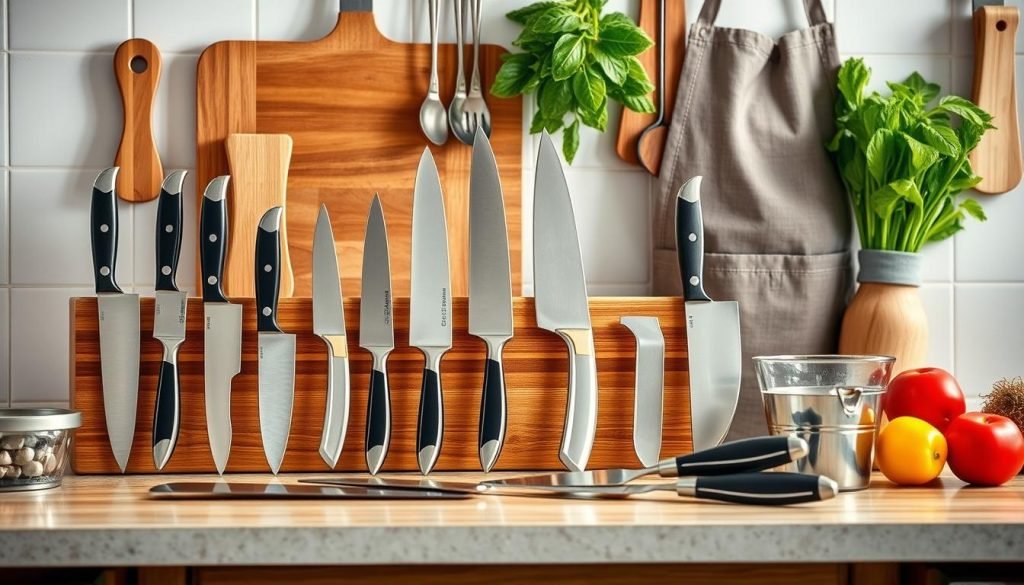
Storing your knives correctly keeps them sharp and safe. Chef James Dumapit suggests avoiding traditional knife blocks. They can be unclean. Instead, use a knife sheath, magnetic knife bar, or roll bag. These keep the blade’s edge sharp and prevent them from getting dull. A plastic sheath, which costs about $5, protects your knife edges well.
Regular Sharpening: Tools and Tips
Honing your knife every time you use it makes it last longer. It’s important to know the difference between honing and sharpening. Honing fixes the blade without removing material. Sharpening grinds down the edge to make it sharper. A honing steel works well for regular care. But for deeper sharpening, use a tabletop sharpener (around $20) or a whetstone ($30 to $100). Always hone at a 20-degree angle to keep the knife edge sharp.
Good knife care includes cleaning, storing safely, and honing often. Doing these things keeps your knives sharp. This makes cooking better and more fun.
Understanding Knife Brands: Who’s Who in the Market
Your kitchen experience gets better with the right knife brand. Kitchen must-haves to pro knives, knowing reliable brands helps make good choices.
Popular Brands: Established Names to Trust
Many esteemed kitchen knife brands exist, like Cutco, Farberware, Cuisinart, and Calphalon. They’re known for quality and lasting use.
- Cutco: Known for high-end sets, Cutco knives can be pricy, found on their site and some online stores.
- Farberware: Offers budget-friendly choices, like a 15-piece set for about $40 at Target. Their 22-piece set is under $25 on Amazon, with over 24,000 reviews and a 4.3-star average.
- Cuisinart: The Classic 15-piece set is around $100. Both the 12-piece ColorPro and the Advanced Cutlery 14-piece sets are under $60 on Amazon.
- Calphalon: Set prices start near $180, with top collections up to $300.
Emerging Brands: New Players Worth Noticing
New brands like Schmidt Brothers and Artisan Revere are changing knife design and materials. They’re exciting and new.
- Schmidt Brothers: They mix beauty with function. A chef and paring knife pair costs about $40, with 15-piece sets between $380 and $400.
- Bark River Knives: Focuses on semi-production and handmade knives, all made in the U.S. Prices are usually around $200.
- Artisan Revere: Their processes are U.S.-based, except for Elmax steel from Sweden. They value quality and craft.
| Brand | Product | Price | Special Features |
|---|---|---|---|
| Cutco | Knife Set | $1,000+ | Premium quality, exclusive availability |
| Farberware | 22-piece “Never Needs Sharpening” Set | Less than $25 | High affordability, extensive reviews |
| Cuisinart | Classic 15-piece Block Set | $100 | Balanced options for all needs |
| Schmidt Brothers | 15-piece Block Set | $380-$400 | Design-focused, high functionality |
Safety First: Proper Knife Handling Tips
Keeping safe while handling knives is key in a kitchen. By using the right moves and tools, you can cut down on accidents. Let’s look at important knife safety tips, like picking a good cutting board and cutting safely.
Cutting Board Basics: Choosing the Right One
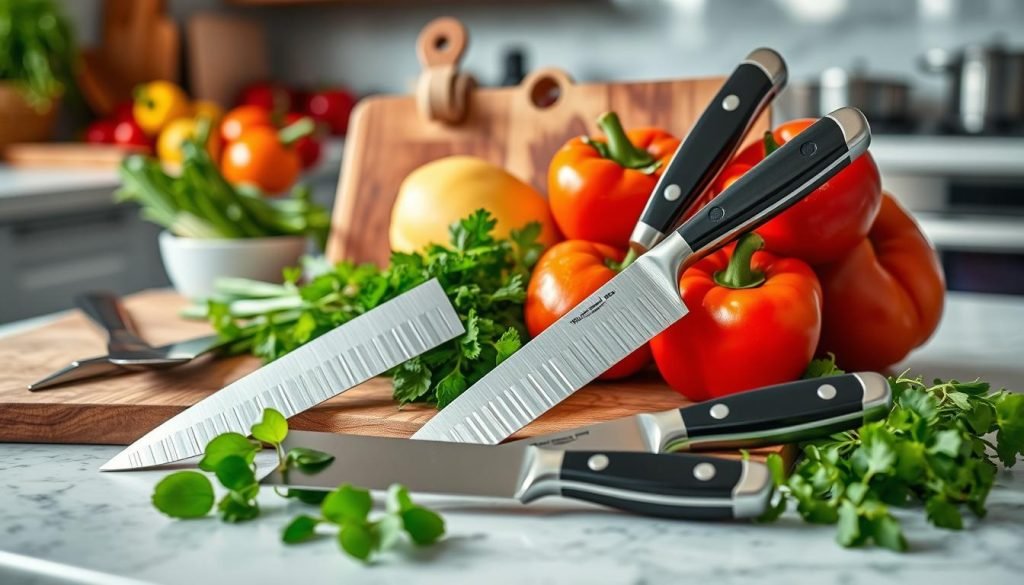
The kind of cutting board you use matters a lot for safety and doing a good job. Wooden and plastic boards are best because they’re easy on knives and don’t slip much. Picking the right board can make cutting 50% safer.
| Cutting Board Material | Pros | Cons |
|---|---|---|
| Wood | Gentle on knives, natural antibacterial properties | Requires more maintenance, not dishwasher-safe |
| Plastic | Easy to clean, dishwasher-safe | Can develop grooves that harbor bacteria, less durable |
Safe Techniques to Prevent Accidents
Using knives safely is key to prevent cuts. Always hold tightly and cut with care. Remember, sharp knives are 80% safer to use than dull ones, as they need less force and slip less.
- Have a “safety circle” around you to keep enough space.
- Use both hands for folding knives to avoid accidents.
- Keep your cutting area dry to prevent slips.
- Wearing cut-resistant gloves adds safety.
- Put away knives in a block or on a strip; it drops accident chances by 30%.
Focusing on knife safety and the right tools makes your kitchen safer and your cooking better. Good practices and the best tools lower accident risks.
Budgeting for Knives: Finding Value
Looking for the best kitchen knives can feel hard, especially with all the pricey options out there. It’s important to find a good balance. You want to get great quality without spending too much.
High-End Knives: Are They Worth It?
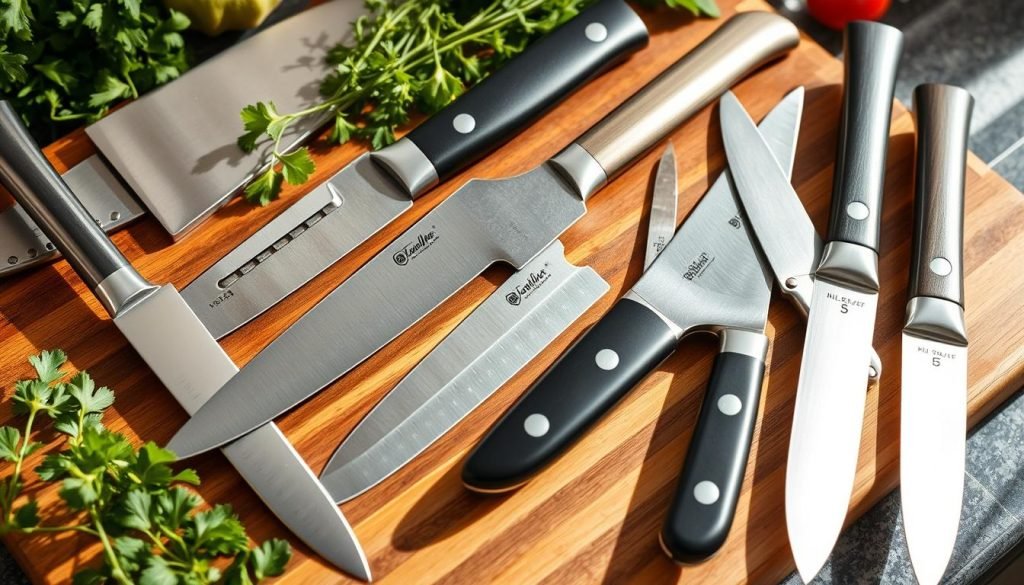
High-end knives last a long time and cut really well. Brands like Shun, Wüsthof, and Zwilling sell knives that cost a lot. But they’re made with great materials and keep their sharp edge.
Let’s peek at some pricey choices:
- Shun Classic: These knives cost about $150-$200 and are super sharp.
- Wüsthof Classic Ikon: They’re around $200-$250 and fit nicely in your hand.
- Zwilling Professional S: These are $100-$200 and have blades that cut really well.
Finding Affordable Options: Quality on a Budget
You can find good knives without spending a lot. Some great knives are under $100. They still work well for cooking every day.
Here are some knives that don’t cost too much:
| Knife | Price | Blade Length | Weight |
|---|---|---|---|
| Knafs Lander 1 | $40 | 2.75 inches | 2.4 oz |
| Gerber Savvy | $100 | 3.5 inches | 3.0 oz |
| Civivi Mini Praxis | $30 | 2.98 inches | 2.77 oz |
| Kizer Dogfish | $50 | 3.5 inches | 3.38 oz |
| Kershaw Iridium | $100 | 3.5 inches | 3.38 oz |
Picking the best kitchen knives means thinking about what you need and how much you want to pay. You might need something for professional cooking or just everyday use. Often, the less expensive choice is still good in quality and lasts long.
The Role of a Good Knife Block
Storing knives right is key for their lasting use and for keeping a safe kitchen. You can pick a classic knife block or a cool magnetic strip. Each option has its own perks for your cooking needs.
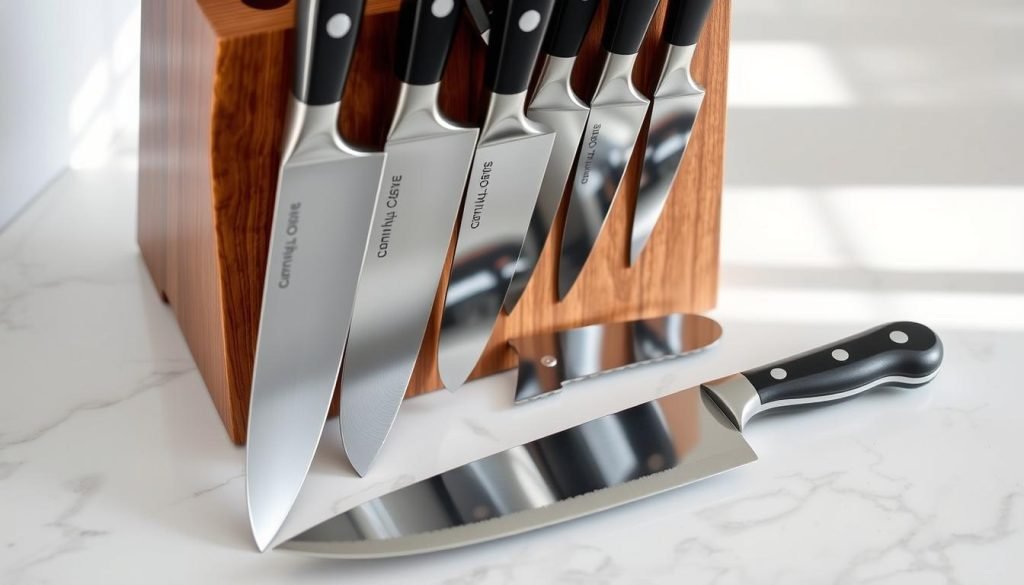
Choosing the Right Knife Block for Your Kitchen
Picking the right knife block involves looking at your knife set size and counter space. For new cooks, the Zwilling Pro 6-Piece Knife Block Set at $299 is great. The Wüsthof Classic 7-Piece Knife Set for $349 is loved by pro chefs.
“When buying a knife block, think about the number and size of knives it fits and how it looks in your kitchen.”—American Culinary Association
For a small but useful option, get a block that holds key knives. Brands like Wüsthof, Zwilling, and Shun have special slots for different knives. This ensures they’re well kept and stored right.
Benefits of Using a Knife Block vs. Magnetic Strips
You have two main choices for storing kitchen tools: knife blocks and magnetic strips. Each has its benefits:
- Knife Blocks: Popular with home and pro chefs, they have multiple slots. Some sets include more than 20 pieces, with prices up to $1999.99. Knife blocks, like the 16-slot ones from Zwilling, keep your knives safe and easy to grab.
- Magnetic Strips: These are great for saving space and look modern. By hanging them up, you save counter space. Your knives are always visible and easy to reach. They fit well in minimalist or fashionable kitchens.
In the end, the best choice depends on your kitchen’s design and what you like. Either way, storing knives right makes them last longer and improves cooking.
Common Knife-Related Mistakes to Avoid
Keeping your kitchen knives in good shape is key for safety and longevity. Here are some knife mistakes people often make.
Neglecting Regular Maintenance
Forgetting about knife care is a big mistake. Regular care includes cleaning, drying, and sharpening properly. Knives need a 30-second wash with soap to kill germs, like when you wash hands.
They shouldn’t stay wet for more than 2-3 minutes to avoid rust. Dishwashers can make knives dull and rusty. In fact, 70% of knives may get damaged in dishwashers.
Sharpening your knives well is key for keeping them sharp. Using a dull knife can make injuries 40% more likely. Sharp knives need less force, reducing slip and injury risk.
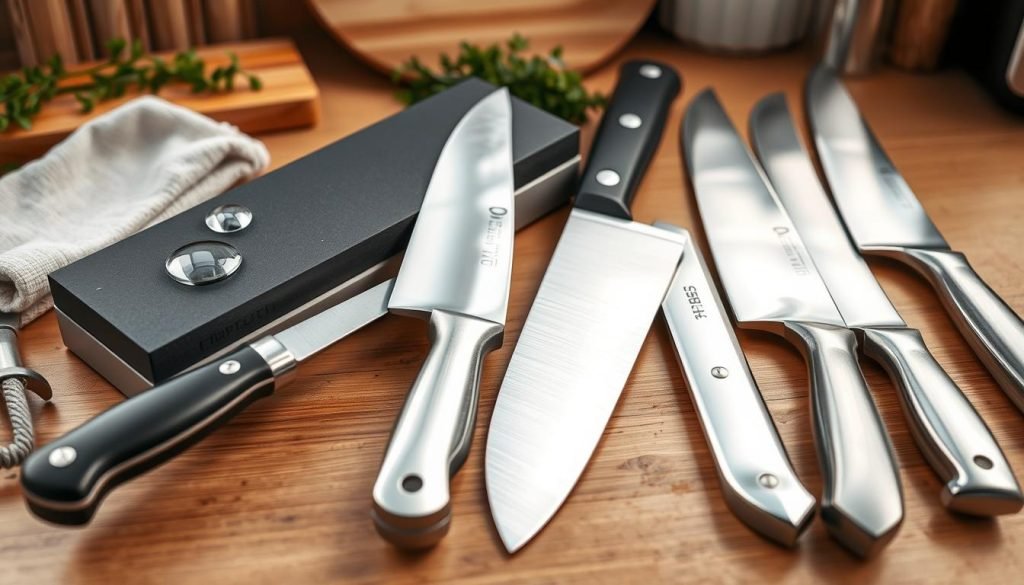
Choosing the right cutting board is also important. Avoid glass or ceramic boards as they can dull your knife. Wooden or plastic boards are better for keeping knives sharp.
Using the Wrong Knife for the Task
Using the incorrect knife for a job is another error. A chef’s knife, 8 to 12 inches long, is great for chopping. A paring knife, 3 to 4 inches long, is for peeling.
A serrated knife, meant for bread, shouldn’t be used on meat. It’s because of its sawing action.
The table below shows the right blade lengths for different knives:
| Type of Knife | Recommended Blade Length |
|---|---|
| Chef’s knife | 8 to 12 inches |
| Paring knife | 3 to 4 inches |
Using the knife’s right part matters too. Use the heel for hard stuff and the tip for soft tasks. Proper use and care mean your knives will last longer and work better.
How Can Mastering Knife Skills Improve My Use of the Best Kitchen Knives?
Improving your culinary experience begins with mastering knife skills. When you can master essential knife techniques, you enhance your efficiency and precision in the kitchen. This expertise allows you to wield the best kitchen knives more effectively, transforming meal preparation into a seamless and enjoyable process, elevating both your confidence and dish presentation.
Enhancing Your Kitchen Experience with the Right Knives
Getting better at cooking starts with the right tools, and good knives are a must-have. Whether you cook at home or are a chef, the right knives can change how you feel about cooking. They make food prep from slicing to dicing better, boosting your time in the kitchen.
How Quality Knives Can Improve Cooking
Good knives make cooking fun and more simple. A quality knife, like those from William Henry, keeps a sharp edge, fights rust, and feels good in your hand. They help make every slice perfect which is key for good cooking. For example, a sharp knife keeps veggies juicy, boosting their taste and texture. Plus, a sharp knife means fewer accidents, keeping your kitchen safer.
Personalizing Your Knife Set: Making It Your Own
Choosing the right knives can make your cooking even better. Think about handles that feel good and offer a solid grip, from hardwoods or carbon fiber. You may also want knives made from top steels for a sharp edge that lasts. Picking the right knives means every cut, from mincing garlic to dicing onions, becomes easy and fun. It’s what good cooking gear is all about.